
What’s in the Sky Tonight?
Facing South, look to your right (West), and you will see the bright star Arcturus. The really bright star almost straight overhead is Vega. Left of Vega, you’ll see another bright star–Deneb. And below Vega, you’ll see the bright star Altair. These three stars make up the Summer Triangle. Note the difference in color between Arcturus (red) and Vega (blue).
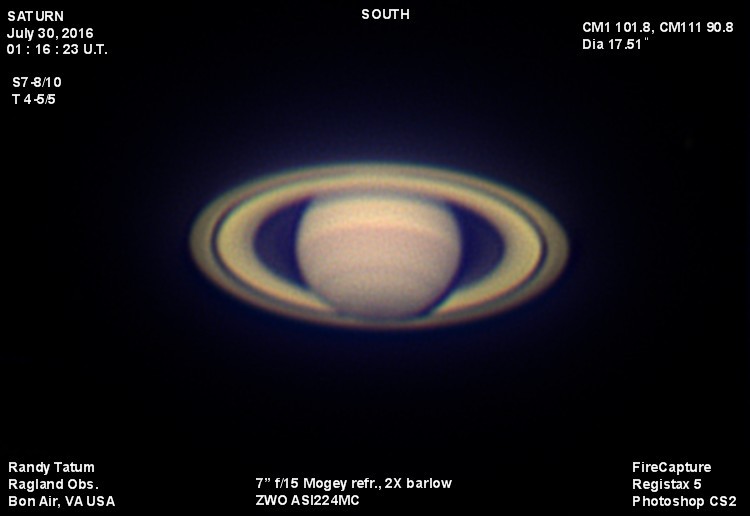
Saturn is in the eastern part of the sky.
Here is a list of things you should be able to see in Fall with just ordinary binoculars (7 x 35).
- Corona Borealis – Between Arcturus and Vega
- Summer Triangle – Vega, Altair, Deneb
- Wild Duck Cluster – Near Altair
- Epsilon Lyra (Double star) – Near Vega
- Albireo (Colorful double star) – Near the center of the Summer Triangle
- Andromeda Galaxy – High in the East
- Double Cluster – Between Cassiopeia and Perseus
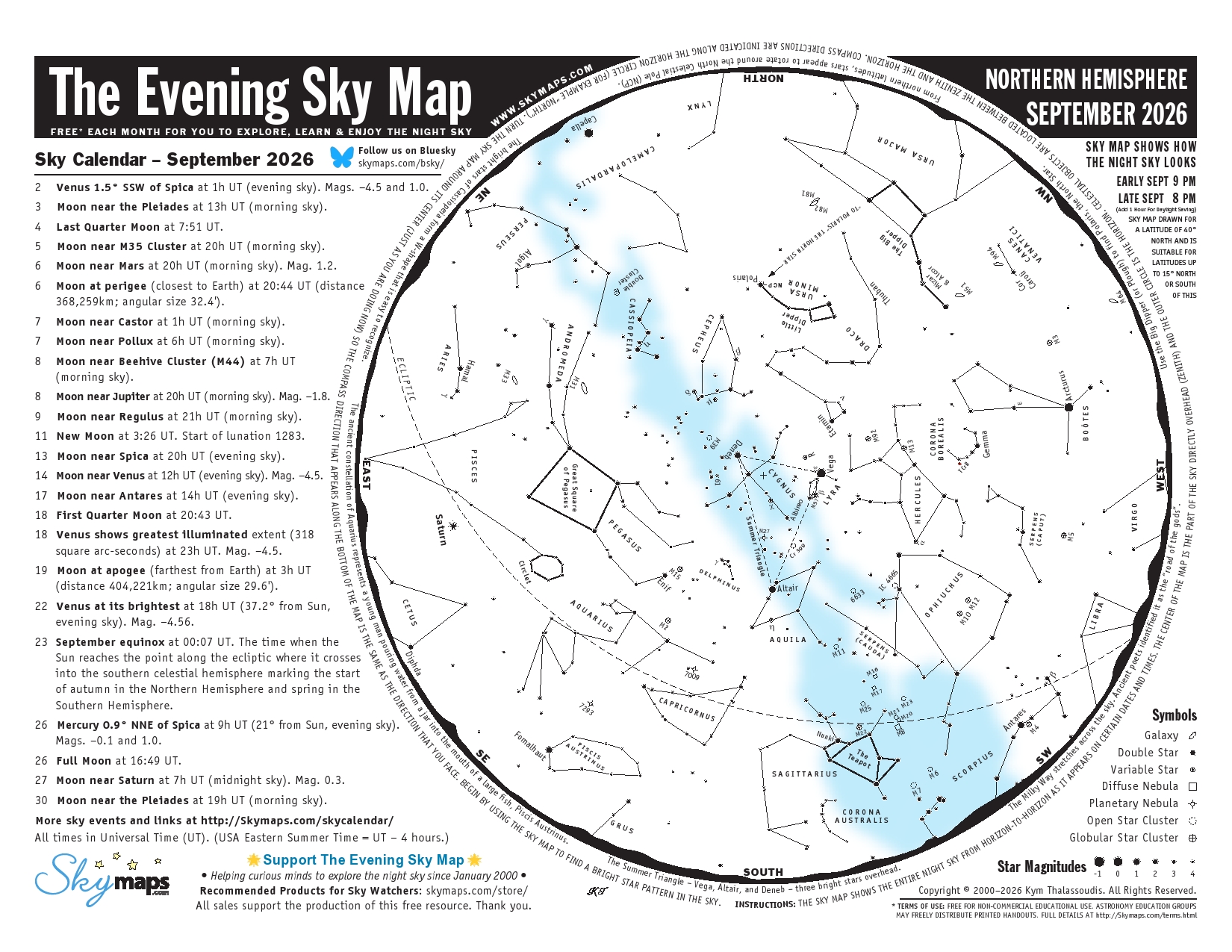
You can use this diagram as a guide. It can be downloaded at skymaps.com. The orientation for the map is set for South, with the middle of the circle representing straight overhead. Turn the map upside down when looking North.
The larger the blob on the map, the brighter the object will appear in the sky–note the magnitude legend at the bottom right of the map. Contrary to intuition, the higher the magnitude number, the dimmer the object appears.
ISS (International Space Station passes)
Will the ISS make a pass over Richmond tonight?